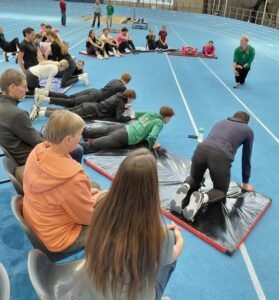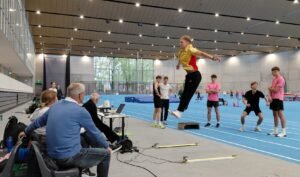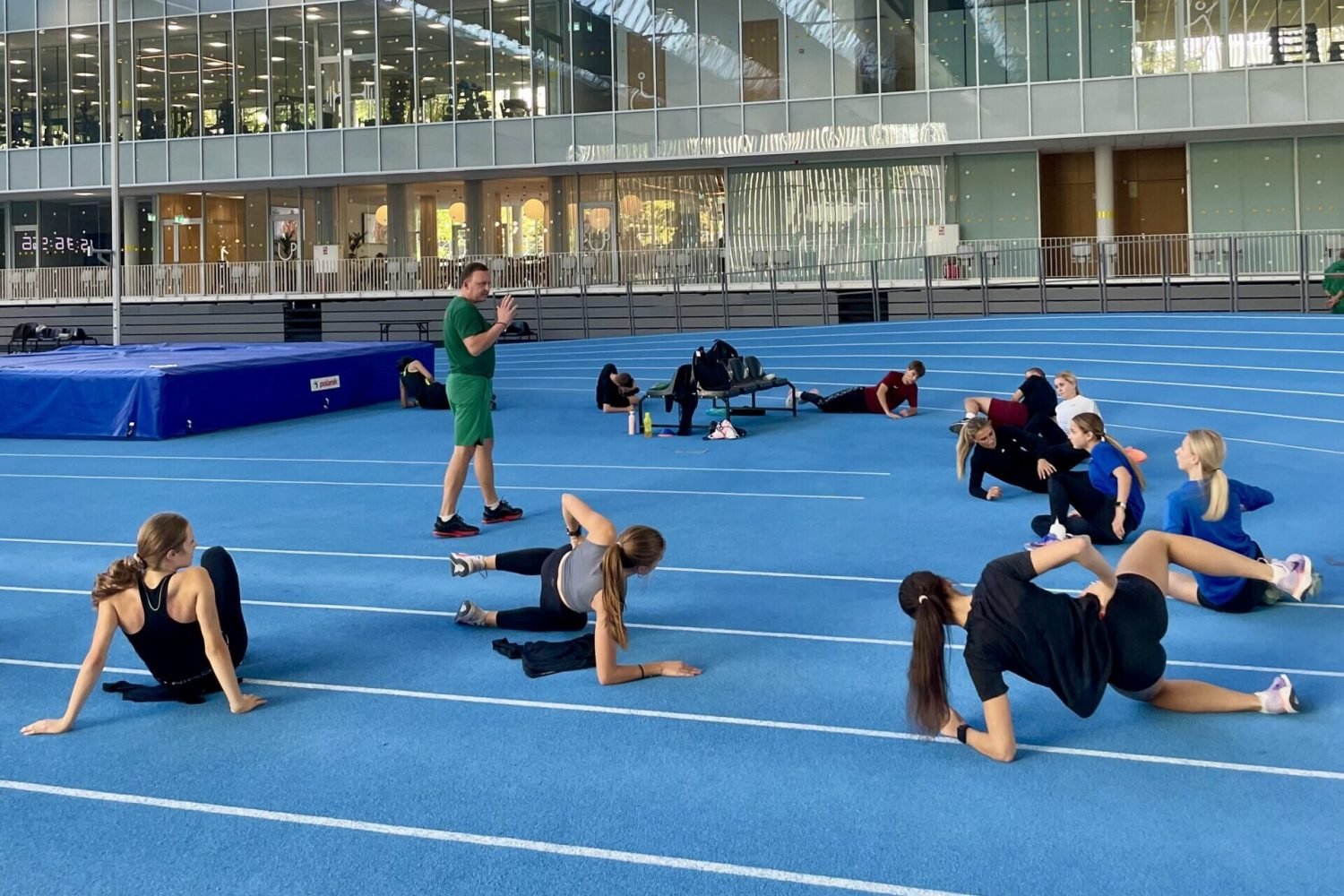

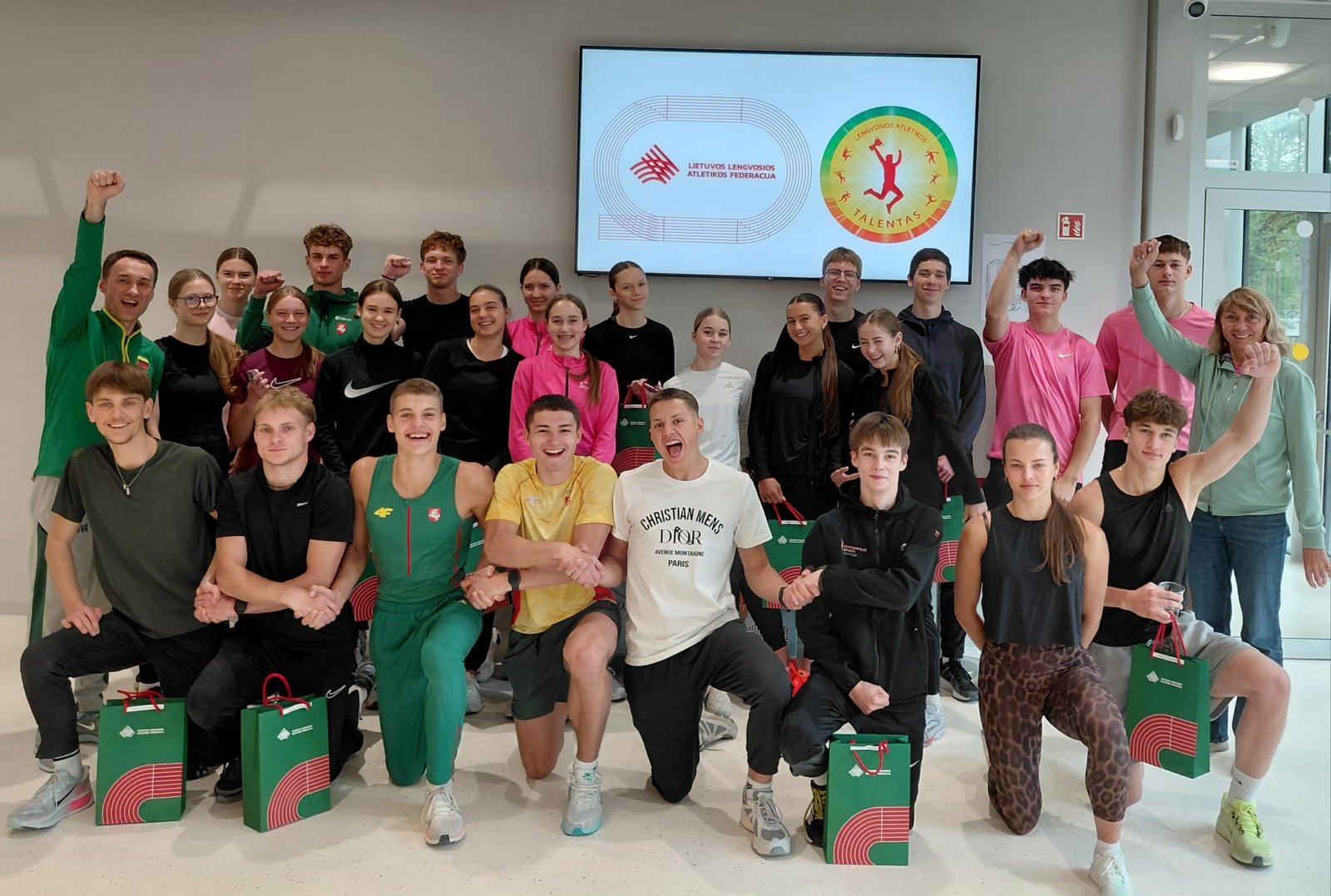
May 9–On the 10th, the new athletics arena of Kaunas President Valdas Adamkus became the home of young Lithuanian track and field athletes – there was a presentation of the project “Athletics Talent“ Weekend camp. Almost 30 sprinters and jumpers from all over the country not only exercised and studied their physical capacity together with experts, but also listened to inspiring lectures.
Attention to everyone
The program, which started last autumn, has already organized several meetings with young athletes. The groups were tested and divided according to the similarity and specifics of the races – into the group of long and medium distance runners and sports walking, and the group of sprint, jumping, multi-fight and throwing. The first one camped in Druskininkai for almost a week in April, and now a weekend camp for sprinters and jumpers has been organized in Kaunas. This time, the main focus was on testing athletes, education and general formation of sports thinking.
According to the head of the programme and curator Dr. Evaldas Kandratavičius, the idea of the tests was twofold. “First of all, we wanted to evaluate the changes in physiological indicators and progress compared to the autumn tests – in other words, to see how the athletes managed to use those seven months between the two stages. However, we did not limit ourselves to this – since we had already invited only selected sprinters and jumpers to this camp, we wanted to get to know them even deeper, so we modified some of the tests and chose even more precise methodologies that allow us to collect more data that is invisible to the naked eye,” explains the experienced sports specialist.
He adds that the educational part of the camp was no less valuable – the young athletes were taught about the preparation of the body for the load, the structure of the warm-up, the quality of movements and the general logic of preparation for training. “We wanted young athletes to understand why they do one or another exercise in preparation for training. Modern sport is increasingly called “detail sport”, so not only the work itself is important, but also the ability to understand the essence of the process,” says E. Kandratavičius. One of the most valuable activities of the camp is the practical session with Mantas Lesnickas, a physiotherapist of the Lithuanian national team.
Inspiration and example
However, according to the program director and curator, such camps have a much broader idea. “We want to spread a common message to the young athlete – that he is visible, monitored and important for Lithuanian athletics. Often, a talented athlete works in a rather closed circle every day – school, coach, several competitions. At this age stage, doubts arise, distracting “side tracks” that cause some talented athletes to withdraw from sports or lose motivation. Such meetings allow you to see the wider world of sports, get to know other promising athletes, and feel the community,” E. Kandratavičius shares his insights.
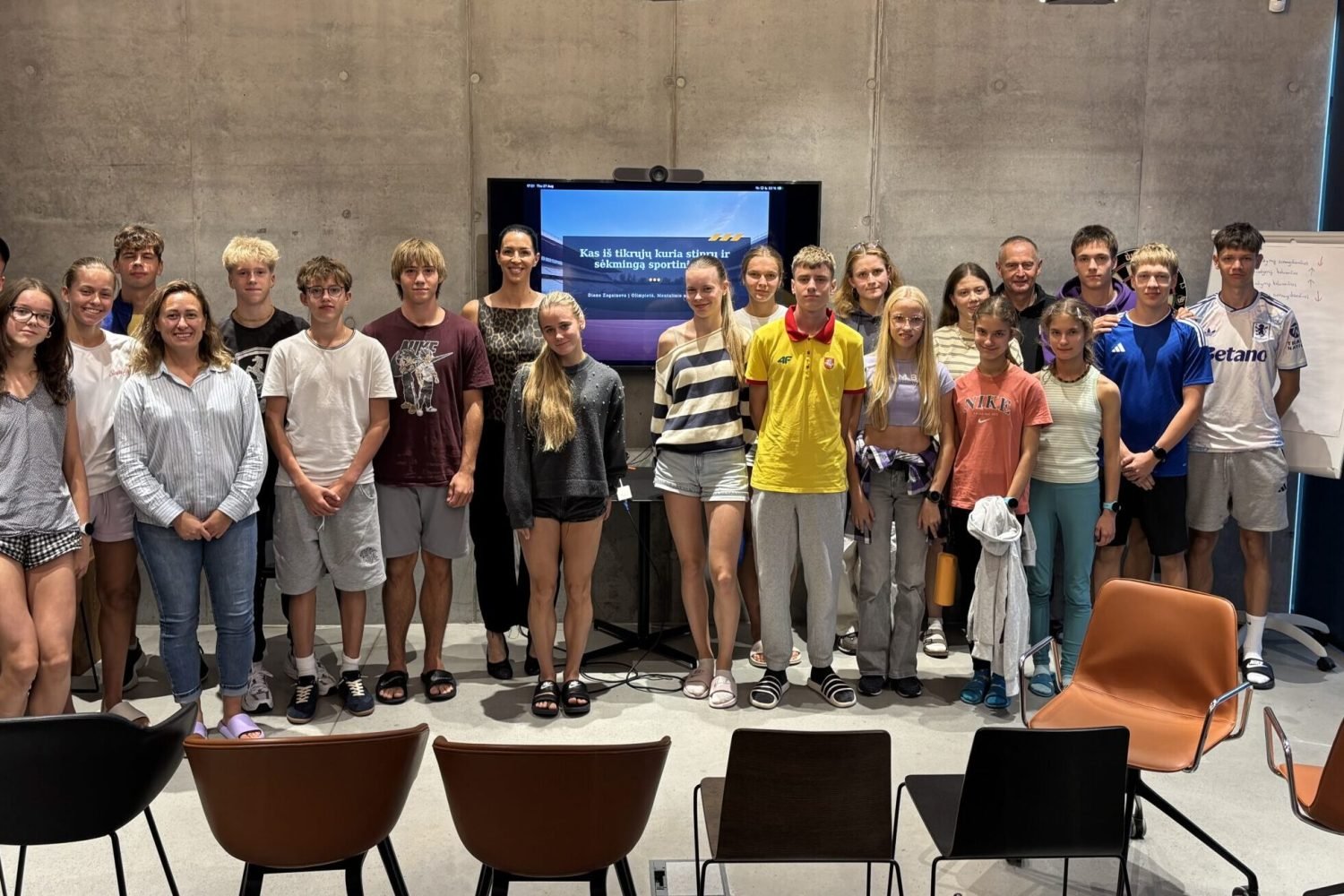
The inspiration to be in sports was also shared with the young campers by Olympian, Lithuanian record holder, triple jumper Diana Zagainova. She openly talked about her path, experiences and challenges, shared the most interesting stories from the world of high-skill sports. The participants of the camp and their coaches unanimously repeated that it was a very interesting and inspiring meeting – just like the whole camp.
E. Kandratavičius adds that in the future it is planned to continue organizing similar camps, testing sessions and educational meetings. The aim is also to consistently collect testing data, monitor the progress of athletes and, in the long term, create a clearer model of individual education for talented young athletes.
The camp is financed from the state budget funds allocated by the National Sports Agency under the talent development project “Athletics Talent”. This is the LLAF Young Talent Identification and Development Program, designed to discover and develop talented athletes with the greatest potential to achieve high results in athletics. The program is based on the Long-Term Athlete Education Strategy (IALS), which focuses on the sustainable development of athletes, ensuring that they reach their athletic maturity and high results only with proper preparation, avoiding the negative effects of early specialization.