
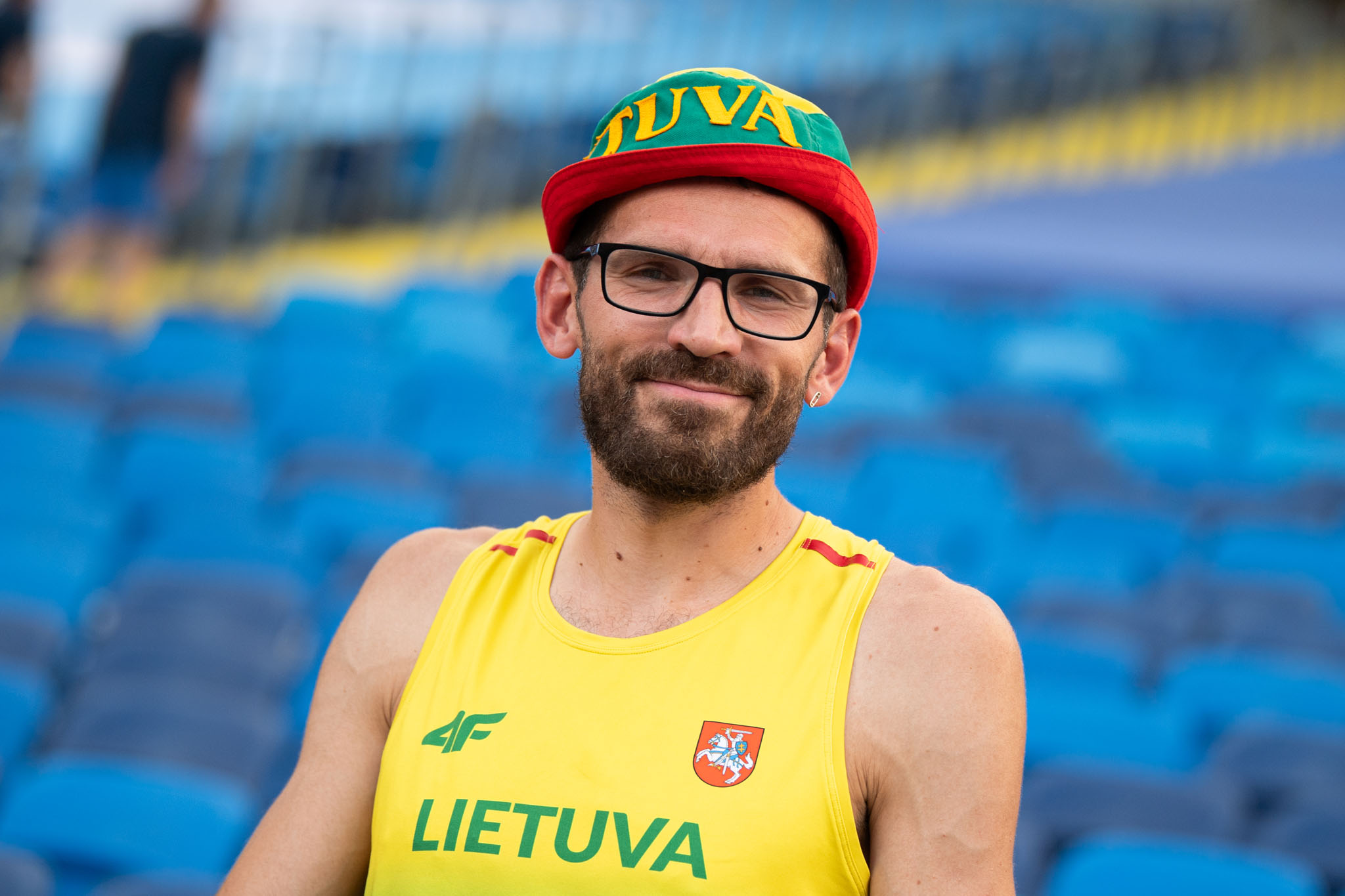
“Running is like a puzzle. It is impossible to find a single answer to achieve high results. The most important thing is to constantly improve and have patience,” says one of the most successful Lithuanian middle-distance runners, coach Justinas Beržanskis. His pupils Greta Karinauskaitė and Gabija Galvydytė are Lithuanian record holders, and he himself was one of the few men who came close to the record in the 3000-meter obstacle course. The latter has not been improved since 1969. J. Beržanskis emphasizes that with the modernization of the approach to running, the results will gradually increase. International experts also agree with this.
There is no single answer
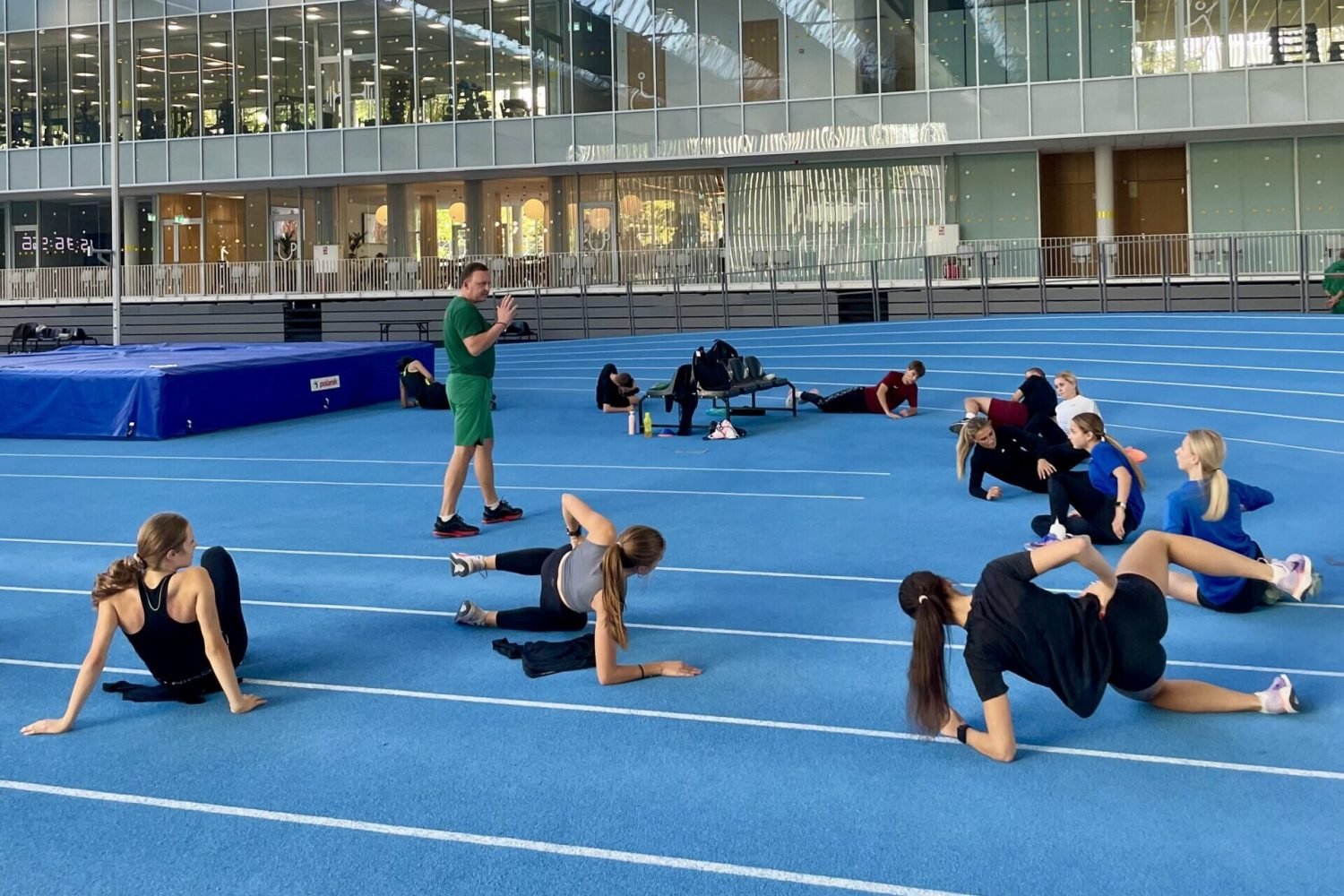
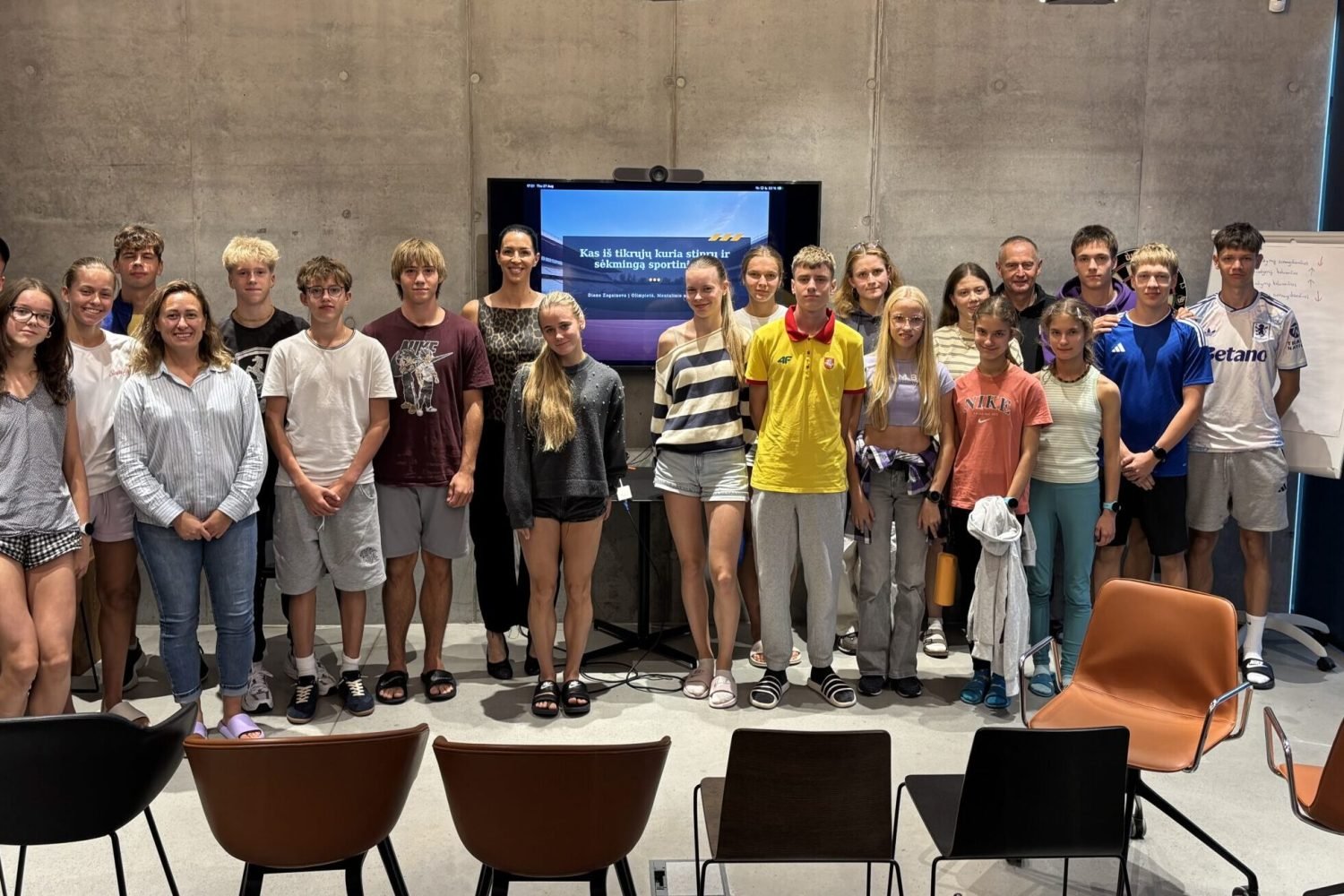
On November 28-30, the Lithuanian Athletics Federation (LLAF) held training for middle-distance running coaches in Kaunas. They were led by World Athletics-accredited lecturer, sports physiologist Dr. Gareth Sandford from Great Britain. J. Beržanskis, a multiple Lithuanian champion, a participant in two European Championships and a coach of a group of successful runners, who came to deepen his knowledge, says that he has strengthened his motivation to continue what he is doing.
“The lecturer shared a lot of tips, which I myself apply in training. Lactate measurement, testing, setting up training zones… Only once again I made sure that I was not behind the global trends. Of course, I also take new insights with me, which I hope to apply in the long run,” the coach shares his impressions.
At the same time, he emphasizes that it is impossible to hear one golden rule even in the highest level of training. “No one can say how to prepare one or another athlete. If such a person appears, everyone would be Olympic champions. I myself look at all this as a puzzle: God’s gift to the athlete + the relationship between the coach and the athlete + the competence of the coach + conditions = the result,” smiles J. Beržanskis.
A “dying” match?
He himself has written in the history of Lithuanian running in bright letters: he has probably covered the 3000-meter obstacle course in 8 minutes 36.88 seconds. This is only 14 seconds slower than the Lithuanian record, which was set by Vladimir Dudin back in 1969. In recent years, there are almost no runners of a similar level in our country, and the reasons for this, according to J. Beržanskis, are several.
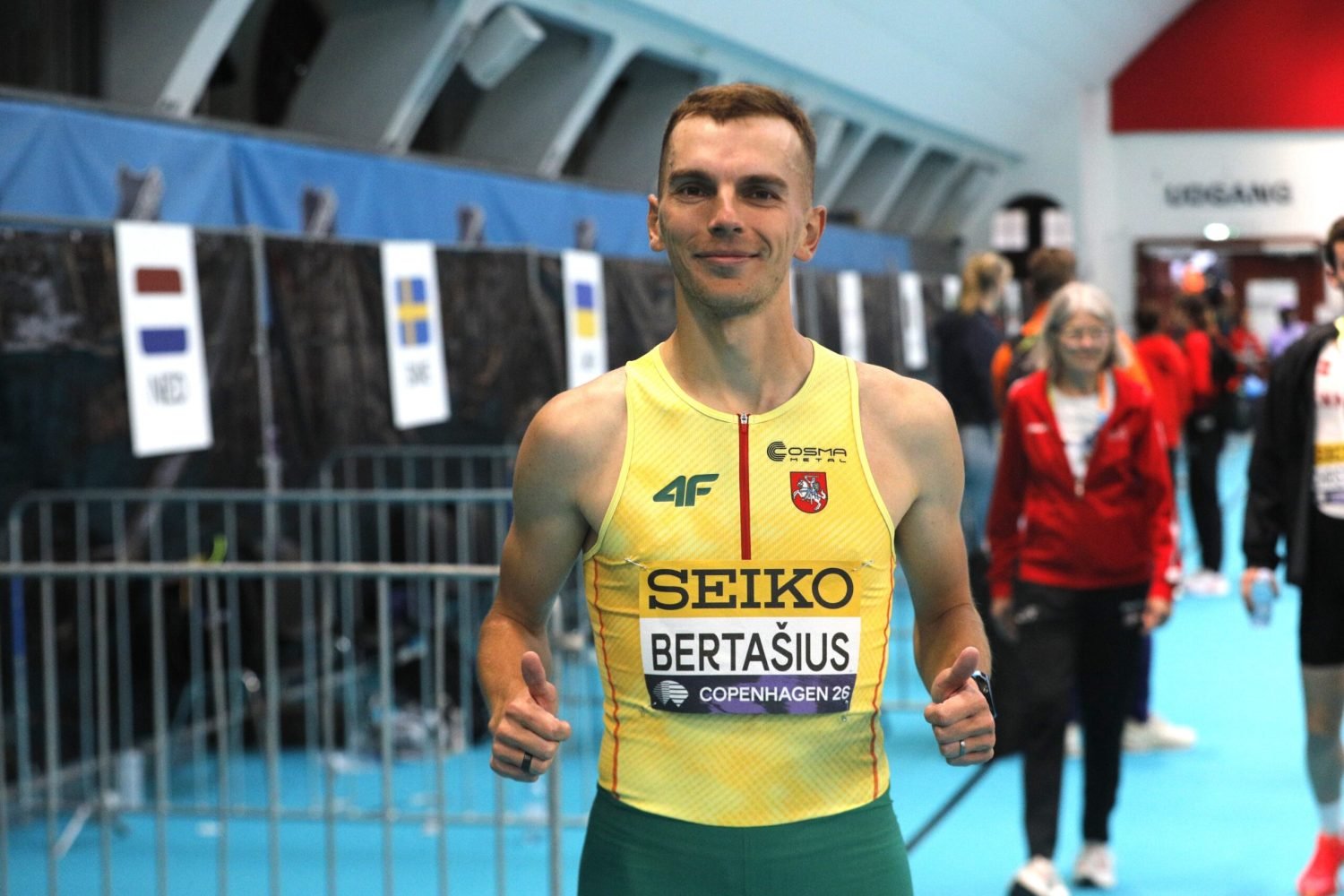
“First of all, it is a technically difficult competition, it requires specific preparation. Secondly , we do not have a mass of higher-level middle-distance runners in Lithuania. Currently, there are 2 men (Simas Bertašius and Giedrius Valinčius) who are improving national records. If there were 5-6 more capable athletes, the competition would grow, and this would encourage some athletes to look for new competitions. We see what is happening in the world with the 1500-meter distance – due to the huge competition, it is becoming more and more difficult to get to the championships and Olympic Games, so some athletes are retraining in obstacle course and they are doing well there ,” explains J. Beržanskis.
Even more impressive are the achievements of his pupils G. Galvydytė and G. Karinauskaitė. The latter has improved the Lithuanian record in the 3000-meter hurdles, winning silver in this event at the European U23 Championships. When asked what determined the success of this athlete, the coach from Šiauliai repeats that there is no single answer.
“We have been working with Greta since 2014 – after just two months of training, she took 3rd place in the 60-meter run at the Lithuanian Olympic Hopes Championship. Greta was always burning with the desire to achieve results, worked consistently and purposefully, and felt enormous support from her parents from the very beginning. It is also important that we were able to find the most suitable distance for her, choose the right training and recovery tools,” the coach lists and adds that it is especially important not to “drive” athletes at an early age. “Not many people will remember that the athlete broke the records of the age groups, but everyone will remember if these are national records ,” the running coach concludes.
Individualization is important
He is joined by G. Sandford, an international coaching expert currently working in Canada. At the LLAF training held in Kaunas, he emphasized, among other things, the importance of individualization and profiling of athletes. “What works for one may not work for another at all. Therefore, it would be foolish to blindly copy the training of even the most successful runners in the world. And on the other hand , even if it seems that an athlete’s training is too easy or too difficult, but his results are constantly improving, you should not blindly criticize either,” explains the expert.
Sandford adds that coaches have a special mission that can fundamentally change an athlete’s results. “The magic happens when athletes play sports, and coaches constantly react and evaluate how training affects a particular athlete. Then everything becomes clear – what workouts to choose next, in which direction to move. Involvement and observation help to evaluate the results more clearly,” summarizes the sports physiologist.
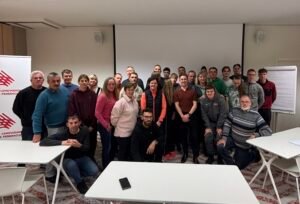
Photo by Alfredas Pliadis and lengvoji.lt.