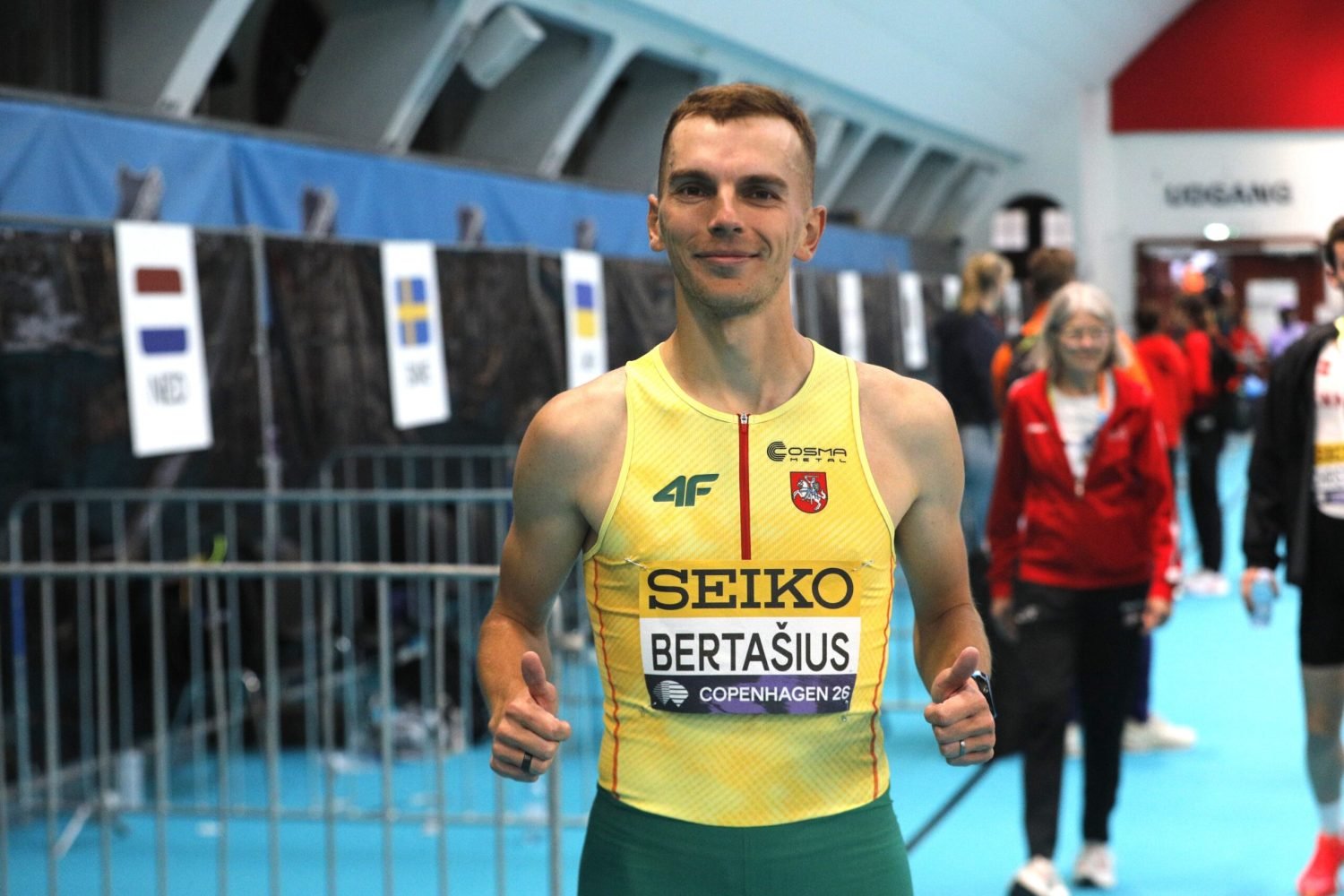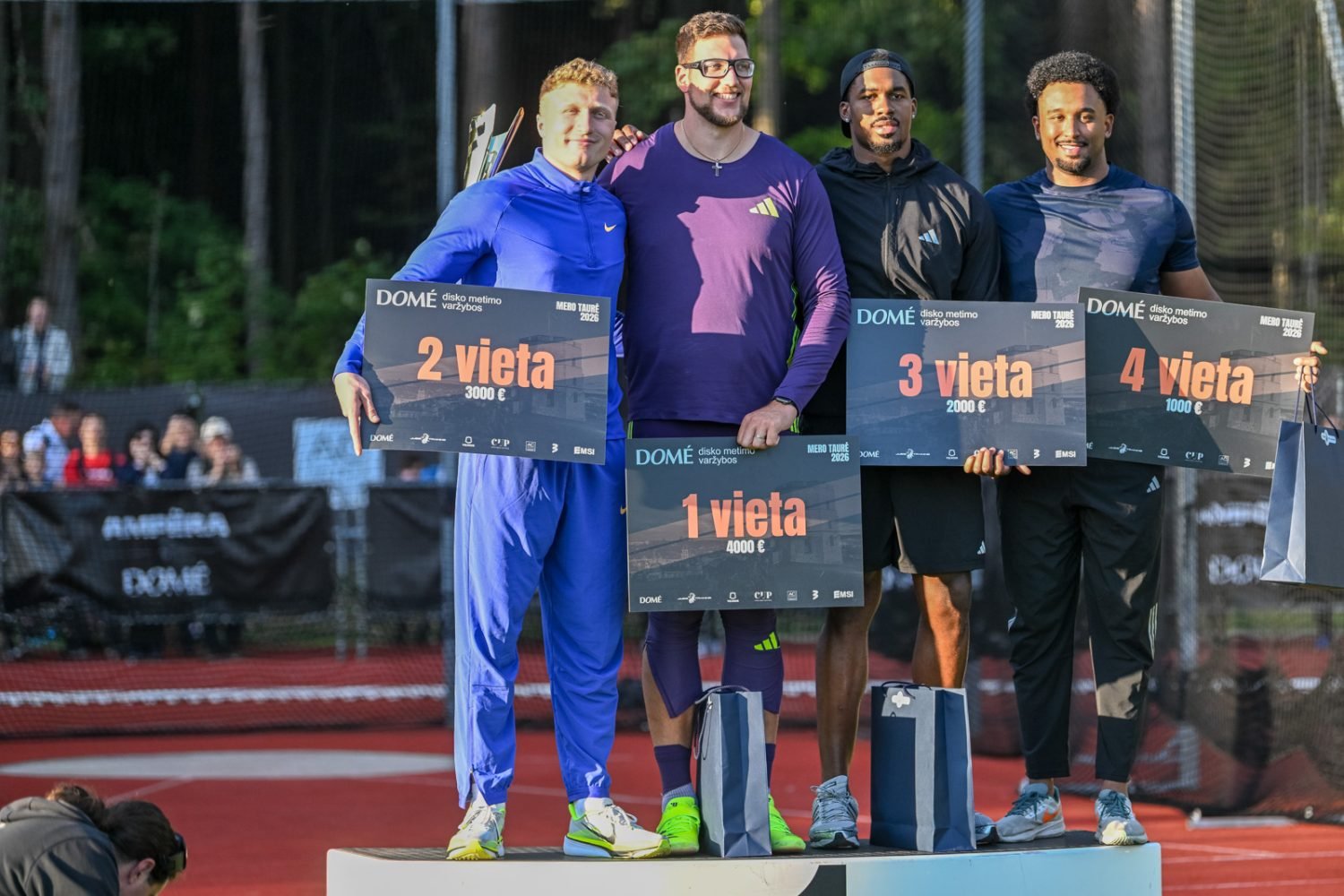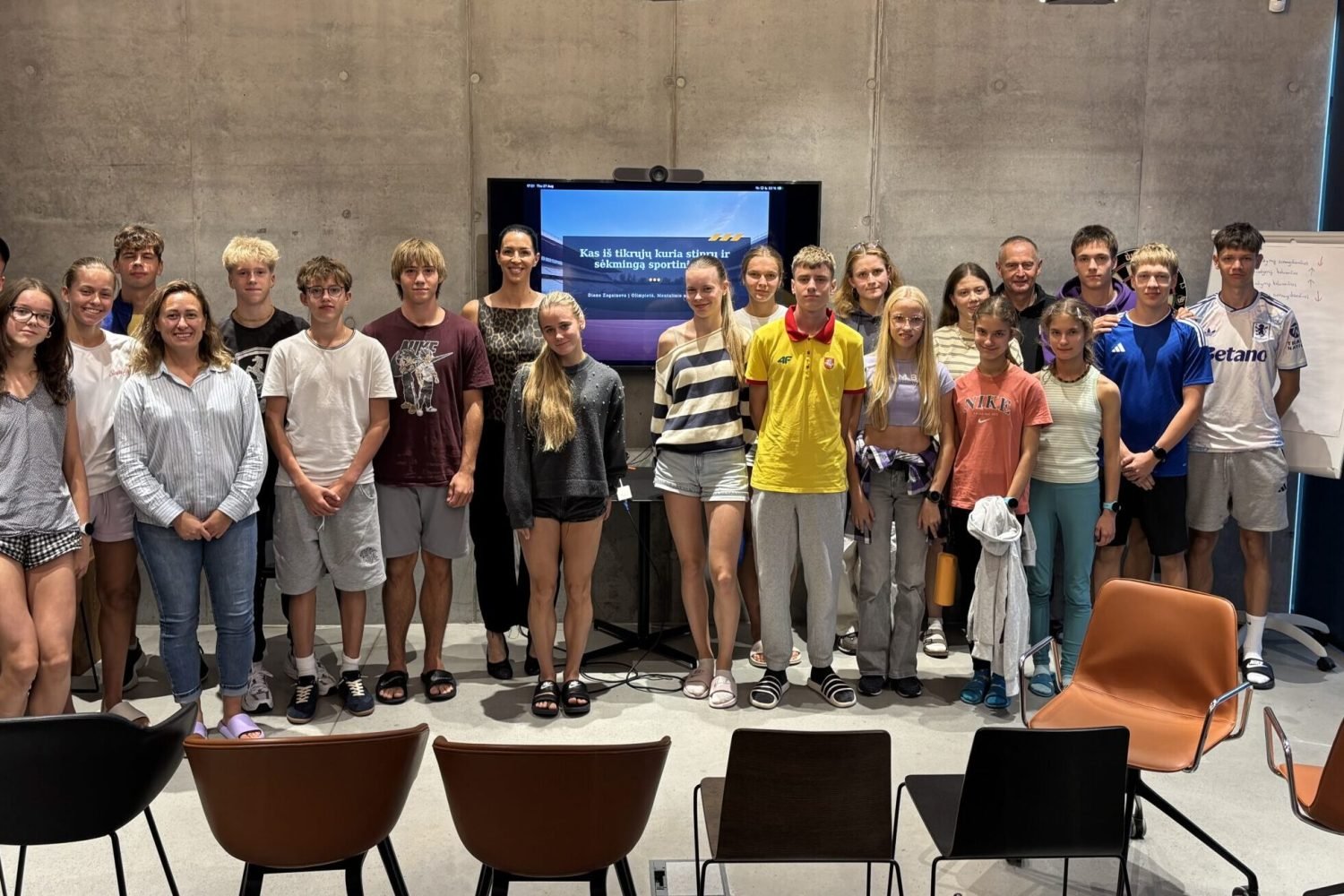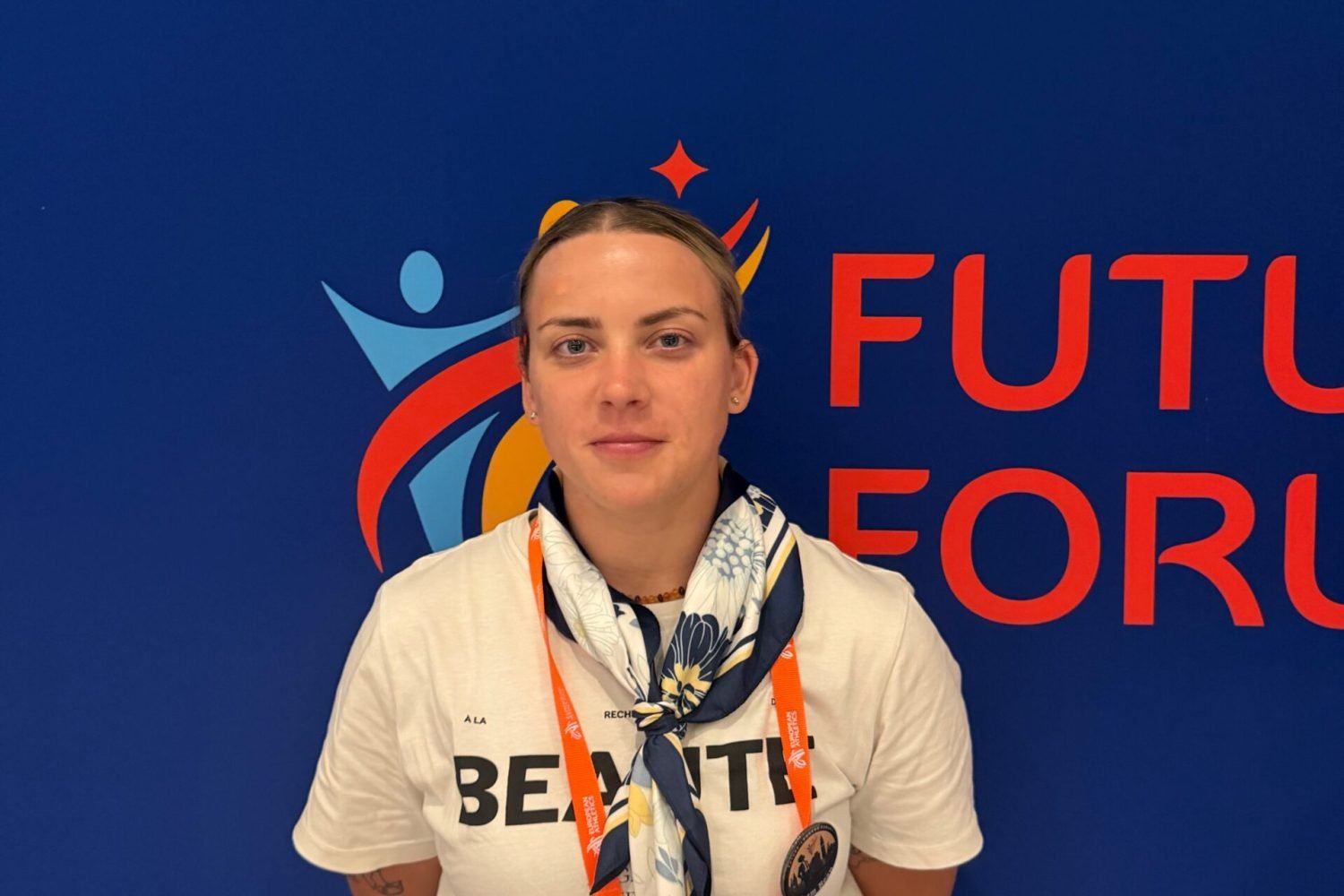

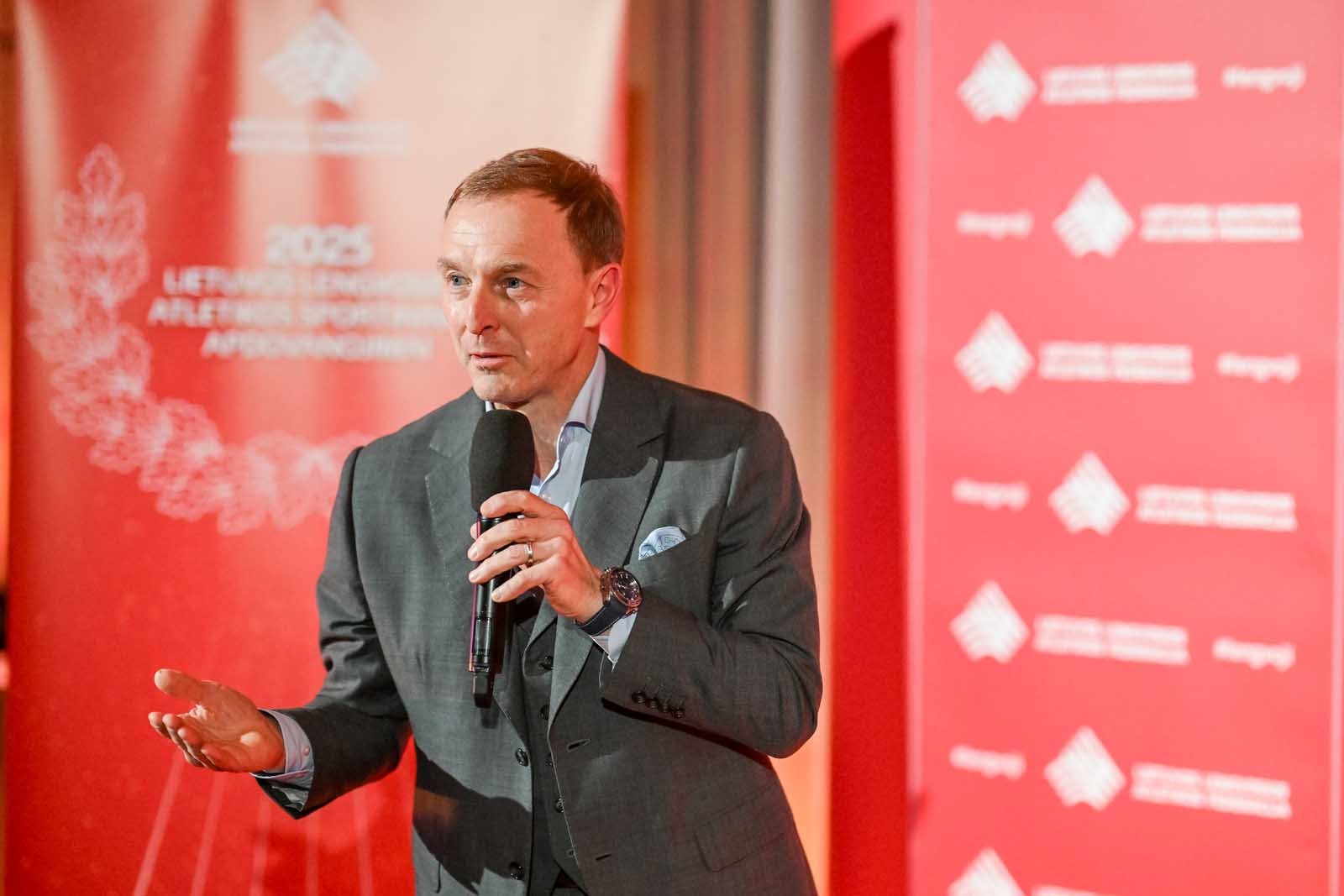
At the beginning of the year, the President of the Lithuanian Athletics Federation (LLAF) Eimantas Skrabulis remembered and evaluated the past year and looked at 2026. The interview not only praised the excellent results of Lithuanian track and field athletes, including the silver medal won by discus thrower Mykolas Alekna at the World Championships and a bunch of national records, but also criticism of the sports reform being discussed in the Seimas and other problems of high-skill sports.
Let’s start with the news – discus thrower, world record holder Mykolas Alekna has signed a cooperation agreement with TV3 media group. As announced, this is the first partnership of its kind that also involves business entities. How do you assess such an initiative?
Unequivocally – a new year, good news. Such a partnership is very important, first of all, for M. Alekna himself as an athlete. It is not only publicity, but also opportunities to attract sponsors, find partners, and entrepreneurs who are interested in the country’s best athletes. Mykolas today is exactly that.
It is even more important for us, as track and field athletes, for the whole community, that the TV3 group chose the athlete. All sports need a kind of “gods”, because hundreds or even thousands of young people follow them. Arvydas Sabonis – in basketball, Rūta Meilutytė – in swimming, Virgilijus Alekna, and now – his sons Mykolas and Martynas, Andrius Gudžius, Airinė Palšytė – in athletics. These are the names that make the country famous and, most importantly, give us confidence that we can. I would like to see more such examples.
Does athletics get enough attention from business in general? Is basketball and football still dominating, and track and field athletes remain somewhere in the corner?
Maybe not in the corner, but athletics is definitely undeservedly forgotten. Not so visible, not so audible, not so known. Whether it’s football, basketball, tennis, or other commercial sports, it’s not a sports moment. The competition lasts a long time, there are a lot of them during the season, so the visibility is high. In athletics, everything is different – the competition is short, sometimes the performance lasts only a few seconds, the starts are often outside Lithuania, so it is natural that it is less attractive to sponsors as a commercial object.
To change that, we need more achievements, which is very difficult in athletics. The competitive environment is one of the largest in the world. Nevertheless, we still have stars, stars. Of course, you need not one, but three, five or eight. The goodwill of media groups and businessmen is also important, because commerce alone will not be enough.
In terms of achievements, what was 2025 like for Lithuanian athletics? Which results are you most happy with?
There is definitely something to be happy about. Last year, as many as 25 Lithuanian records were improved. Even more impressive – M. Alekna improved the world record twice. There is probably no other sport in Lithuania whose representatives would own as many as three world records. In addition to Mykolas, ultramarathon runner Aleksandras Sorokinas and decathlon star Austra Skujytė can enjoy it – no one has been able to improve her world record for 20 years! Such a small country in such a big sport… It is difficult to comprehend achievements that some Lithuanians do not even know about.
At the World Championships in Tokyo, we had a large team of track and field athletes, and my heart sang the most while watching the men’s discus throw final. Out of eight athletes, three are Lithuanians. This has never happened before. Mykolas was decorated with silver, his brother Martynas took the seventh place, and A. Gudžius took the sixth.
Another of the most amazing moments of last year was the European Team Championship in Madrid in June. Our country’s national team competed in the so-called “super league” – among the 16 strongest teams of the Old Continent. We performed really well – javelin throwers Liveta Jasiūnaitė and Edis Matusevičius took the third place, A. Gudžius – fifth, runner Gabija Galvydytė, who started in two distances – fourth and fifth. It is gratifying that we achieve high results in many different matches.
Probably, one cannot help but be happy about the World Athletics bronze-level Cosma Cup competition that has been started in Lithuania. This is an example of how clubs themselves contribute to the achievements of athletes. After all, it is often difficult for track and field athletes to find good starts, and here high-level competitions are held right at home.
Definitely. This is the first swallow in our competition calendar. In general, historically, the Cosma club has been a leader in the country for 25 years, it invests in athletes, coaches, medicine, and now, by organizing such competitions together with LLAF, it has raised everything to a new level.
Although it costs a lot, it primarily provides an opportunity to attract very high-level foreigners to our country. Competition is important for high results. Representatives of about 30 countries participated in the first Cosma Cup competition in Kaunas in June, including the discus thrower Daniel Stahl, who later became the world champion. Secondly, it is an opportunity for Lithuanian athletes to start in their own country, in their stadium, in front of their own spectators. Finally, this is how athletics itself is popularized in the country.
Despite the achievements of such a large number of athletes and new competitions in Lithuania, there were also less happy moods in 2025 – I am talking about the sports reform being discussed in the Seimas. Although the Special Investigation Service, the National Audit Office and the sports community itself are criticized, the changes continue to be pushed. How do you assess this? What is the final result of the LLAF?
It would be wrong to call it a reform. This is the destruction of a functioning sports system. A group of people seeks to take control of the distribution of sports budget funds. All the money is expected to be managed through puppets, subordinate to a real public organization near the Neris. The National Sports Council sounds nice, but it’s pretty deceptive, just the packaging is nice. We do not strictly support these plans, it is, in my opinion, simply a criminal activity. We already have many examples in history when public figures, who bore no responsibility, decided to whom and how much money to allocate to. Only Lithuanian sports suffered from this, and it also affected the most important developers of the country’s sports products – athletes, coaches, federations.
I’m not saying that today’s sports system with the National Sports Agency is perfect. Definitely not. It needs to be improved. But the most surprising thing is that the alleged sports specialists, the Ministry of Education, Science and Sports do not want to talk to a real sports community. Both we and other strategic sports federations, which win the most victories for the country, have a number of rational and important proposals, but no one wants to hear them. Instead, the so-called reform continues to be pushed forward with a bulldozer. However, I have no doubt that that Belarusian bulldozer will get stuck on a big stone and the reforms will fail because the diesel that this bulldozer is powered smells of. Otherwise, it would be the end of a respectable, fair sports policy.
Although you don’t want to think about the scenario when that reform would be adopted, can you explain to readers who don’t know all the vicissitudes what would happen in practice?
All people, especially athletes, want to plan. Athletes are asked for plans and steps before each season, how they will be achieved. Today there is a clear system of what funding federations, athletes and coaches can expect. That stability would be gone. It would not be clear according to what criteria the money is distributed, whether the athletes can expect to go to training camps, or whether they will have something to participate in the competition for. There can be no “likes or dislikes”, it is necessary to take into account specific achievements, the potential of the sport, the size of the Olympic team.
When it comes to the financing of athletes, the Lithuanian National Olympic Committee (LNOC) cannot be ignored.
Definitely. It should be connecting and unifying sports links, but this is really not the case now. The absurd decision taken by the LNOC General Assembly at the beginning of 2025 and without any legal basis not to allocate 40,000 euros each to four sports – athletics, cycling, tennis and biathlon – for the opinion expressed has been loudly heard in public. All of these federations are part of the National Association of Sports Federations (NSFA). When the Seimas adopted the new wording of the Law on Sports in 2024, the latter proposed not to leave exceptions to the requirement to limit the terms of office of the heads of sports organizations – the LNOC has not set such limits.
2026 started with good news – we already have three new national records. The second good news is that the International Court of Arbitration for Sport (CAS) has recognized that the above-mentioned decision of the LNOC is discriminatory and illegal and must be annulled. Sports organisations and athletes cannot be punished for defending transparency, good governance and a values-based sports system. The official court ruling states that the elimination of the four federations in the distribution of aid is discriminatory, punitive and retaliatory in nature. This means, among other things, that the LNOC Executive Committee and the General Assembly will have to reconsider the 2025 budget without the right to discriminate against the four federations. I have said many times and I will repeat it again – only open dialogue can strengthen the entire Lithuanian sports system.
We discussed all the abundance of achievements of 2025. What do you expect from 2026?
I would very much like those stars that have already lit up to continue to shine for a long time and brightly, showing the way to others. I would like those younger stars, of which there are already more than one, to find their way purposefully as well. Let the constellation of athletics be large and bright, let not one, but many stars shine in it.
Do you think that constellation could be an incentive for children and young people to choose athletics?
Definitely. But there is one “but”. Just as swimmers need swimming pools, which have already been introduced in Lithuania, athletics athletes need stadiums and arenas. Those responsible for the development of Lithuanian sports arenas should be ashamed. Vilnius has been waiting for 40 years… But it is not the National Stadium, where there will be almost no space for athletics, but a new arena in Žirmūnai that awaits. I hope that it will be at least similar in quality to the new President Valdas Adamkus athletics arena in Kaunas. If this had happened 30 years ago, there would have been even more of those stars.
From February 28 to March 1, the first Lithuanian championship will take place in the new Kaunas Arena. Is that exciting?
Unequivocally. Only in such a arena and not inferior must not only the most important competitions of the country, but also daily training sessions take place. So that when we go to sports arenas in other countries, we don’t feel surprised that something is unusual for us. And this has happened more than once. Even in the Paris Olympics – when Lithuanians, accustomed to competing in worse conditions, practically on moss, come on the fantastic, modern stadium surface and either get injured or do not achieve the results they are prepared for. It’s a paradox, but it’s true.
Photo by Alfredas Pliadis