
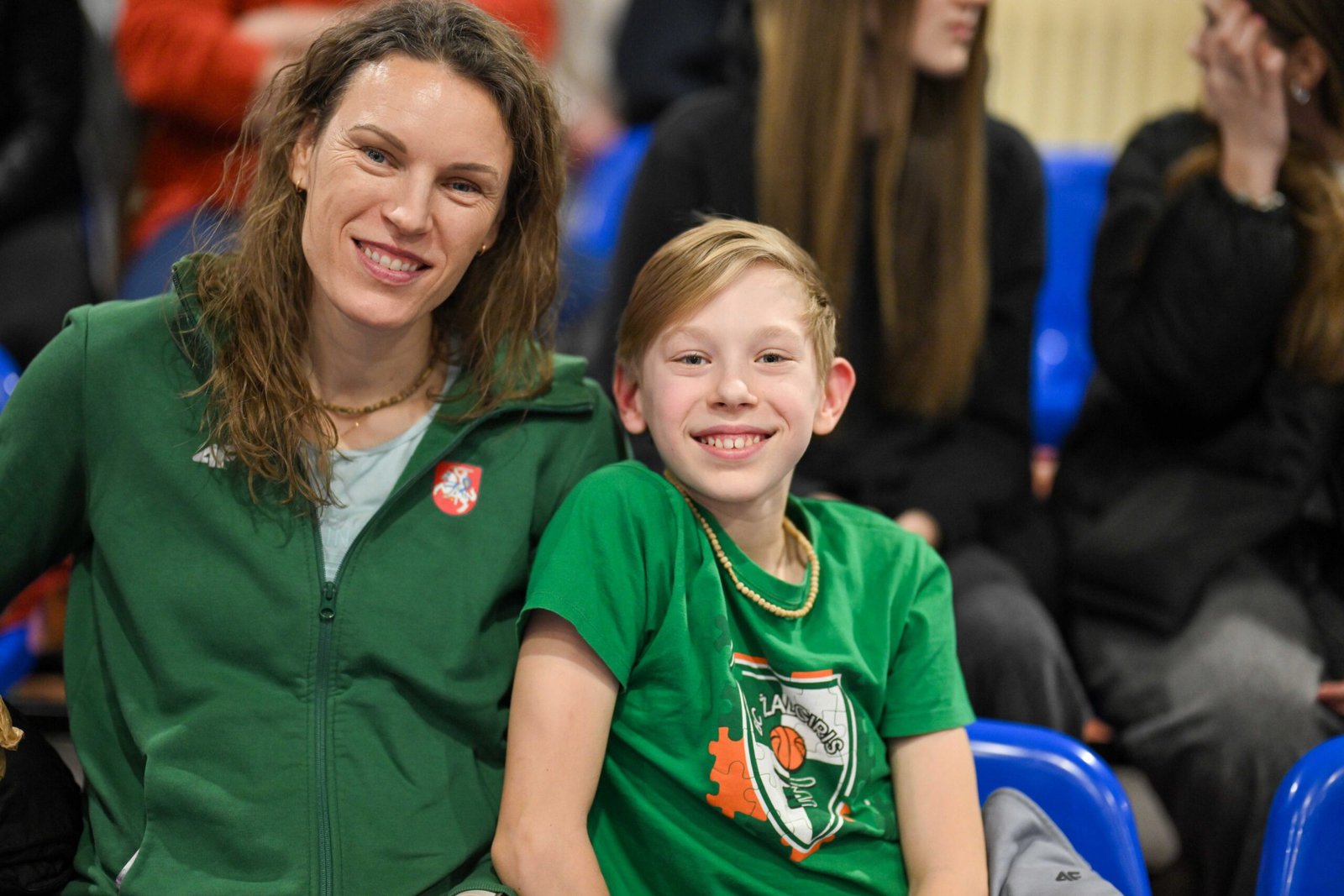
Strict discipline, daily training and competitions from a young age or games, bold experiments and freedom of choice – how are sports stars really born? Although many would probably intuitively choose the first option, the example of the owner of two Olympic medals, the legendary Lithuanian multi-athlete Austra Skujytė proves that it is usually not worth rushing, and a smart approach to sports in childhood does not kill young talents. This is also confirmed by coaching experts.
Three decades in sport – with the same passion
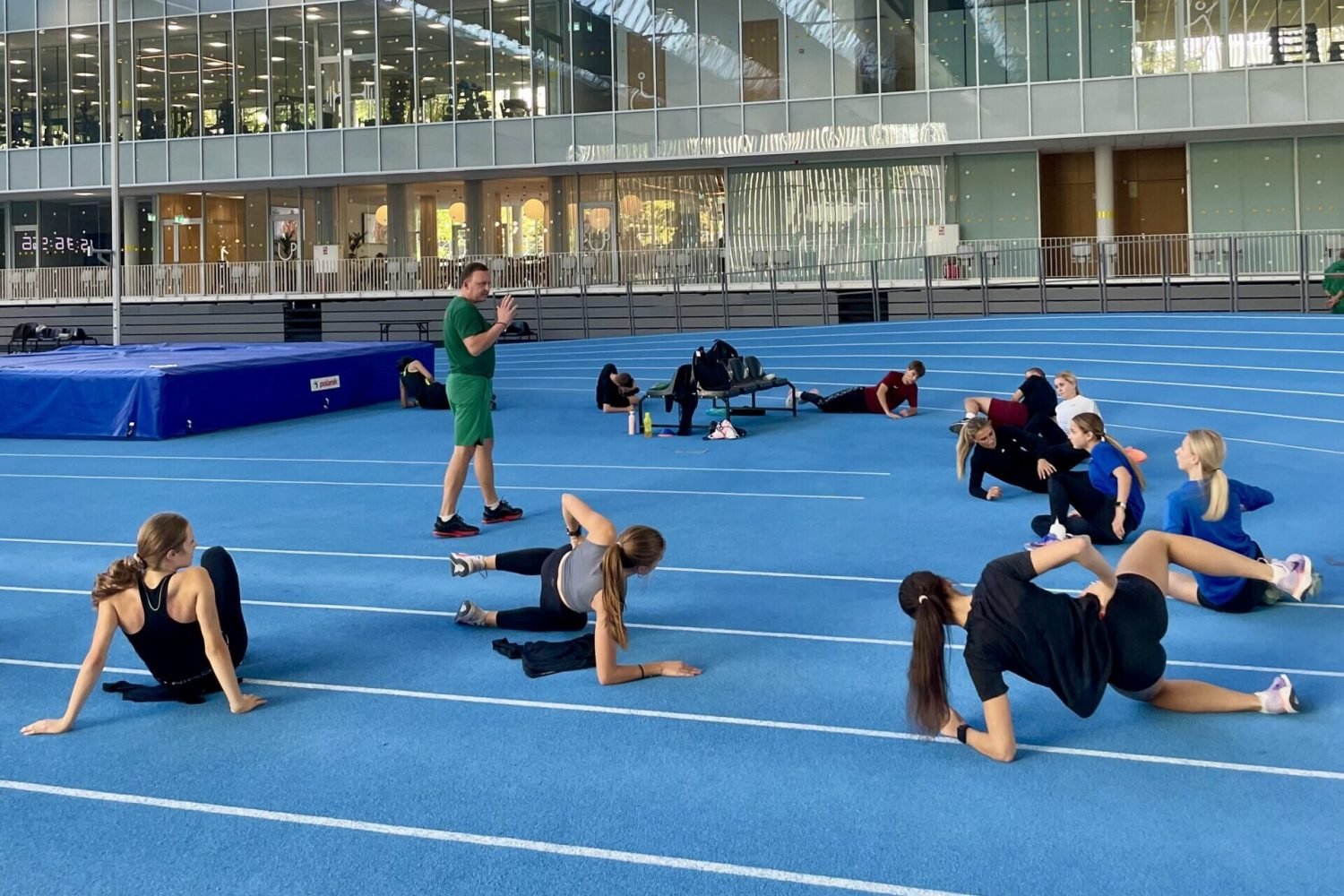
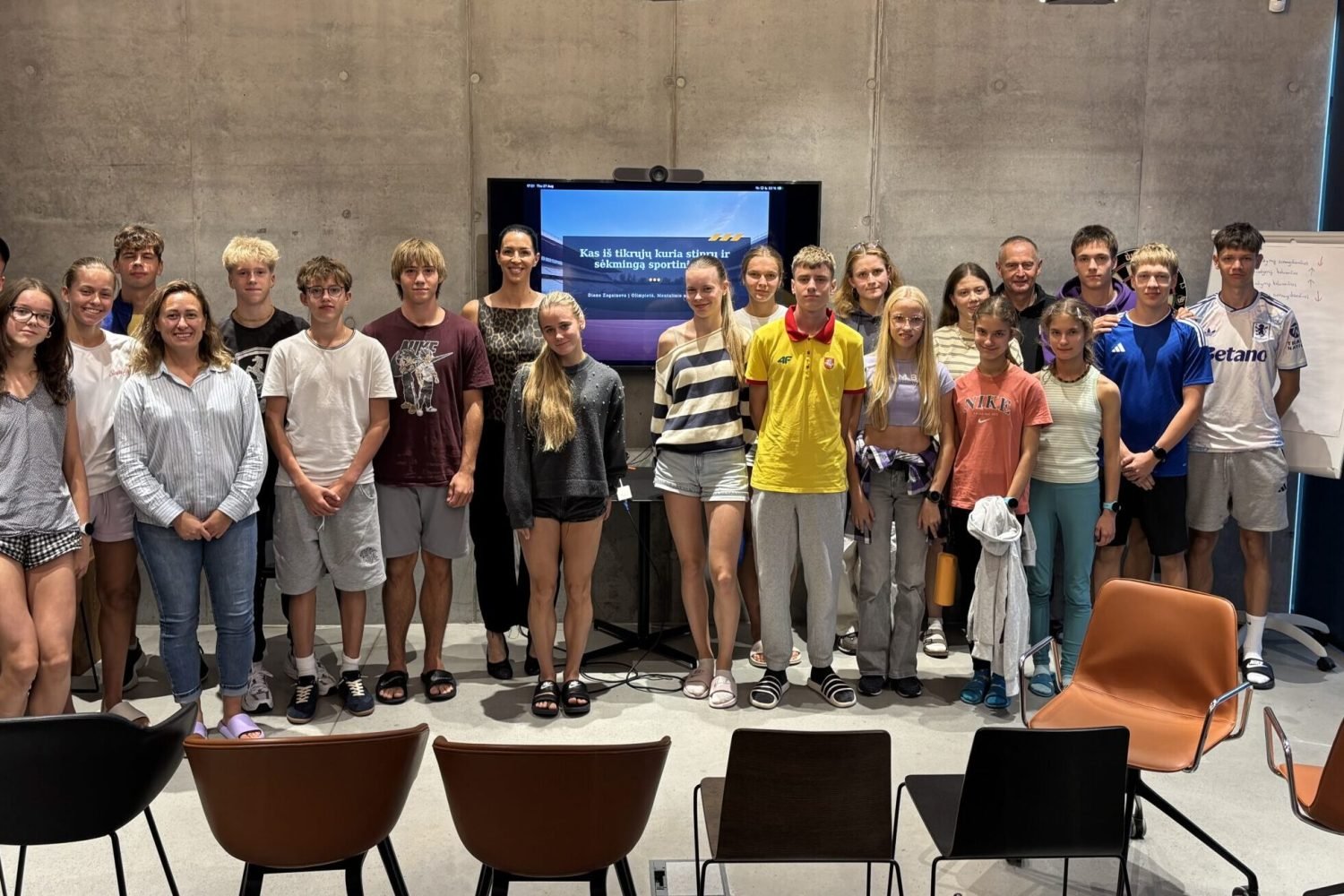
On November 8-9, the Lithuanian Athletics Federation (LLAF) held training for coaches working with young talents, financed by the International Olympic Solidarity. The legendary athlete, who came to deepen her knowledge, and now also the coach A. Skujytė, moved her thoughts to the beginning of her career. According to the 46-year-old woman, her athletic path began relatively late – at the age of fourteen, but she lived an active life from an early age, so this could have been the main key to success.
“If a child of today came to the first training session at the age of fourteen, it is likely that he would have just gotten up from the computer. My first coach was the yard – we were always actively playing, running, always coming up with something new. When I started playing professionally, no one bothered me, allowed me to try various competitions, and didn’t even emphasize the result. So sports have never been bored,” smiles A. Skujytė.
Not only did he not get bored, but he also gave incredible results: since 1998. At the World Junior Championship in France, 6 places were taken until 2004. Silver medal at the Athens Olympic Games and 2012. London Olympic Games bronze and many other titles and records. After announcing the end of her career in 2017, in recent years A. Skujytė has been seen again in the ball pushing sector. The break did not take away her talent and work – both in the LLAF Cup competition in January and in the Lithuanian Student Championship held in March, the Olympian, who is currently studying for a doctorate, climbed the winners’ podium.
Lessons for pupils and son
A. Skujytė tries to apply the example of a long and sustainable career by training a group of her students. “Basically, I work through the principle of multi-fight – children try as many competitions as possible and only later choose one. I certainly know coaches who force a young athlete to be a walker from an early age, if they fail, running is still tried, and if the results don’t work there either, the child’s sports path often ends there. It’s sad…” – the legendary multi-athlete shares the peculiarities of training, adding that these gaps need to be corrected.
A. Skujytė does not forget freedom of choice and bold experiments when raising her eleven-year-old son Jokūbas. The most important thing is that the child is active, and a specific activity depends on his or her own desires and interests. “My husband and I had only one rule for our son – music and sports. And then choose for yourself. During this time, the little one has already had time to try gymnastics, judo, athletics, basketball, football, swimming… At the moment, he has chosen basketball, but who knows, maybe he will discover athletics later…” – laughs one of the brightest stars of Lithuanian athletics. She says she understands that families living in smaller towns or villages do not have such freedom of choice, but there they can enjoy the best club – the yard – and being in the fresh air.
Studies show: take your time
Oliver Scheer, an expert in the World Athletics coaching system and consultant of European Athletics, also spoke about the importance of not rushing when training young athletes. The former German runner emphasizes that smart, science-based training can help not only avoid injuries, but also encourage young people to play sports throughout their lives. “The main message to coaches is not to think only about short-term success. Educate young people as holistically and comprehensively as possible. Specialization too early or focusing on one competition exhausts children at an early age and ultimately encourages them to withdraw from sports,” explains the expert.
He emphasizes, among other things, the importance of training variety. “Use as many brushes as possible, as many colors as possible – this will make the rainbow brighter. Even if it is obvious that the child is preparing for a running race, he can still jump and try other disciplines. This is also relevant at an older age – a 100-meter runner who has achieved maximum results and no longer sees progress can become a great long jumper. Of course, if you weren’t squeezed into narrow frames from an early age,” explains Scheer.
Finally, when asked what is more important – talent or work – the coaching expert emphasizes the importance and connection of both. “I think talent is more important in the early stages. This is the driving force. However, the higher we strive for results, the more important the work becomes. The main challenge is to understand and notice when talents stop working. If we don’t notice this and talented children don’t get used to consistently working and improving, we lose the second factor that determines whether we will be able to reach the top,” concludes O. Scheer from Germany.
Since June, LLAF has been implementing the program for the identification and development of young talents “Athletics Talent“. The focus is on the age groups of young people (14-15 years old), junior (16-17 years old) and young people (18-19 years old), but children aged 12-13 are also considered as potential candidates. The program is based on a holistic approach that includes testing and evaluation of both physical and psychological aspects. A talent ID profile is formed for each athlete, which allows them to personalize the educational process and provide the necessary assistance.
Photo by Alfredas Pliadis