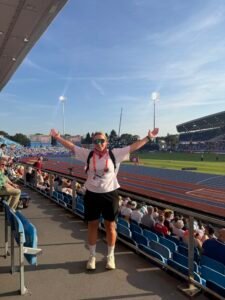

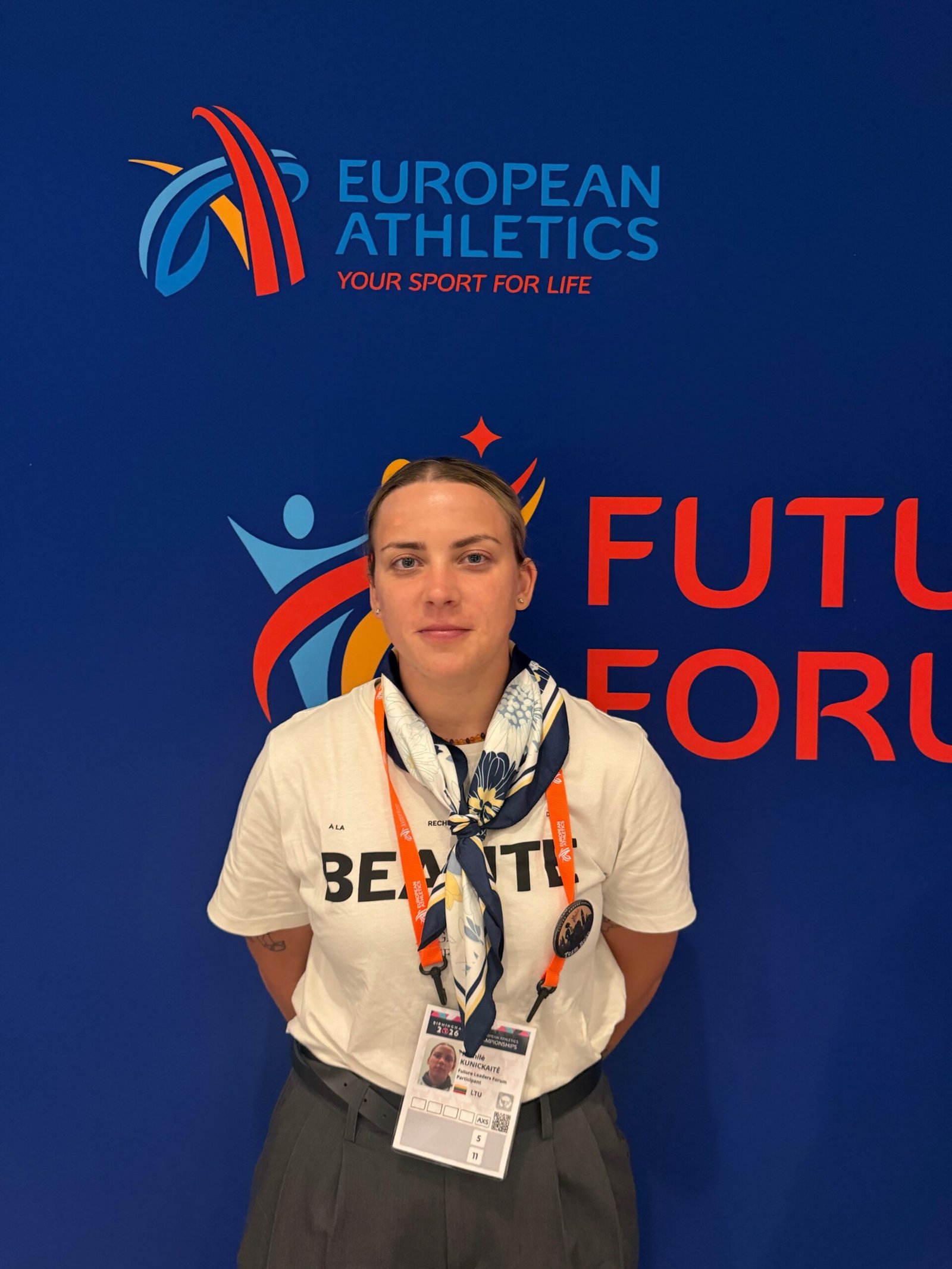
During the European Championships held in Birmingham (UK), attention was not only given to athletes. At the Young Leaders Forum held in parallel with the championships ( “Future Leaders Forum“) promising and motivated young people who see their future in sports met. Lithuania was represented by the young track and field coach Kamilė Kunickaitė, who presented an idea to colleagues and experts that could contribute to nurturing a new generation of coaches.
Leadership lessons
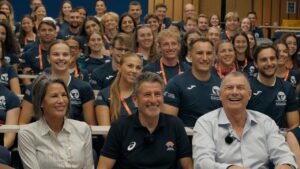
The forum program was designed to develop various leadership skills – from psychology and public speaking to business management. The lectures were given by lecturers and former program participants from the University of Birmingham, and the discussions also included World Athletics president Sebastian Coe, European Athletics president Dobromir Karmarinov, and vice presidents Karin Grute Movin and Jean Gracia. In the evenings, forum participants went to watch the European Championship matches.
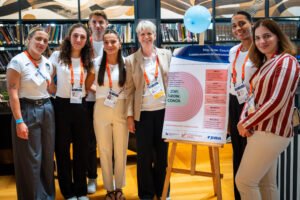
Still, the main task was to present an idea themselves that could help athletics move forward. Within 4.5 hours, teams that had already done their homework in their countries had to develop a project ( English. pitch ) and present it in a public session at the Birmingham library.
The idea of K. Kunickaitė’s team “STAY. GROW. COACH.” It is aimed at young people aged 16-19, who may not have achieved high athletic performance but have a sporting understanding, leadership qualities, and want to stay in the sport. “We want to notice young people aged 16-19 who have a coaching streak, but perhaps they are not very successful at being athletes. Let’s give them the opportunity to become young trainee coaches, work with children, and thus start an early professional path,” K. Kunickaitė presents the idea.
It is planned that program participants would first attend weekend training sessions, and then complete six months of coaching practice at a sports club or school, where they would mentor children aged 8-12. According to K. Kunickaitė, such a system could also help address the aging and burnout issues among coaches – young coaches could work with beginners, while experienced specialists would pay more attention to high-performance athletes.
Dose of motivation
The idea presented by the Lithuanian in Birmingham attracted the attention of other European federations, especially those of the Scandinavian countries. “We even received the question of when all this will start to be done and whether we will present it at other forums. We were strongly encouraged to start operations in our own country and see what results it delivers, and later everything could spread like a bubble across Europe and maybe even become something like “Kids Athletics,”” the Lithuanian woman says with a smile.
The project presentation was also attended by European Athletics vice presidents K. G. Movin and J. Gracia. K. Kunickaitė says she especially remembers their words: “We received a compliment that, being so young, we think very logically and strategically, and that our idea is real and achievable, with meaning for the future.”
K. Kunickaitė calls the Young Leaders’ Forum an invaluable experience – she not only gained knowledge but also established connections with representatives of other federations who could become colleagues on joint projects in the future. “It is an unforgettable feeling to be among young representatives delegated by other European federations who are passionate about athletics. Being there, it feels like you want to do even more, to contribute to the flourishing of your country and European athletics in general,” says the young coach.
According to her, the acquired knowledge should not remain just theory: “When the heart burns with the desire to improve, every new idea, lesson learned, and knowledge gained only pushes forward and strengthens personal and professional growth.”
Photo from personal archive.