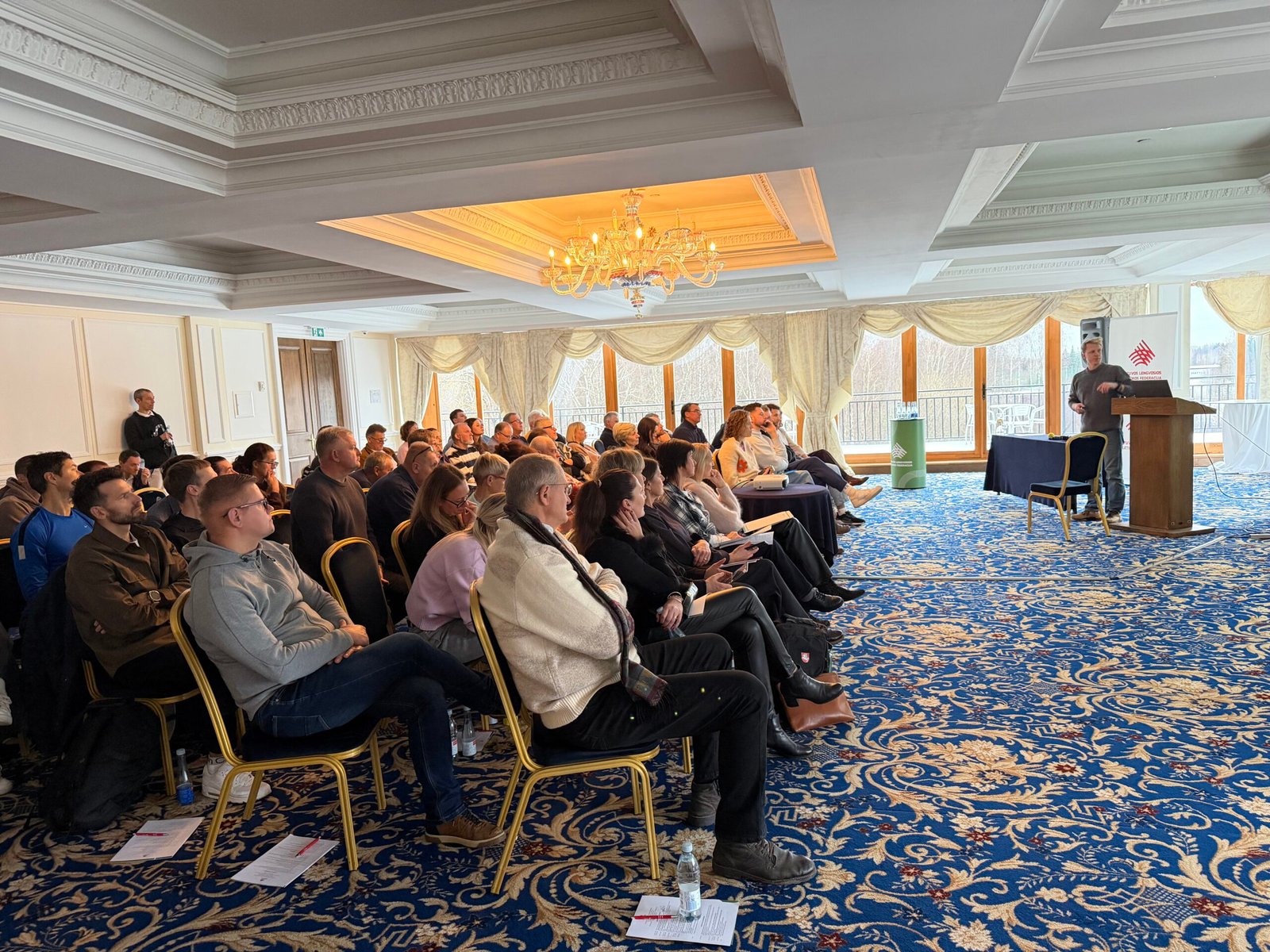
The annual seminar for athletics coaches took place in Vilnius on the last weekend of November. Over two days, sports medicine specialists, psychologists, physiotherapists and members of the athletics community shared their knowledge and advice. More than 70 coaches from across Lithuania left the seminar having gained not only new knowledge but also fresh motivation, as they themselves reported.
The seminar programme covered a wide range of relevant topics, from athlete health and nutrition to creating a safe sporting environment and psychological preparation.
Tomas Venckūnas, a senior researcher in sports science and innovation at the Lithuanian Sports University and a professor in its Department of Health Promotion and Rehabilitation, discussed athlete nutrition and relative energy deficiency in sport (RED-S). “It is important to consume adequate nutrients—that is, to eat as much as you expend. Not too much, but above all, not too little. Carbohydrates in particular are essential in endurance sports and should not be overlooked. Diets and intermittent fasting are not suitable for athletes, because training itself effectively creates short periods of fasting. Diets can interfere with the training process,” the professor emphasised.
Rūta Banytė, director of the Lithuanian Anti-Doping Agency, presented changes to the World Anti-Doping Code and International Standards that will take effect in 2027. Among other changes, athletes in the Registered Testing Pool will be required from the new year to indicate their main training location each day or state that they will not train that day. If doping control officers do not find an athlete at their declared location, they will only be able to call them during the last five minutes of the athlete’s specified one-hour time slot. Further changes are planned, but according to Banytė, the most important thing is for both athletes and coaches to contact specialists immediately if they have any questions.
Innovative medicine researcher and dentist Rūta Turčinskienė presented a three-step athlete testing guide for coaches and emphasised the importance of sports dentistry. “When we talk about the chewing system, it is not just about the teeth—it includes the muscles, tongue, breathing and deep neck muscles. Recurrent dysfunction, improper movement or instability can affect an athlete’s performance and results and contribute to non-contact injuries,” Turčinskienė explained.
Agnė Vanagienė, an IOC-certified safeguarding officer in sport, spoke about creating a safe sporting environment. She stressed that responsibility for an athlete’s safety lies with the entire community around them. “Safe sport is everyone’s responsibility. Everyone around an athlete, whether a coach or an organisation’s director, can take small steps to help them feel respected and safe and pursue their personal best without any form of violence,” Vanagienė said.
Physiotherapist Mantas Lesnickas presented a session titled “All Problems Start with the Foot”, psychologist Aistė Žemaitė spoke about the importance of supervision in addressing problems, and Paulius Petraitis, chief physician of the LSC sports medicine department, discussed tendon injuries and stress fractures in sport.
Considerable attention was also devoted to the LLAF “Athletics Talent” programme. Its director, Dr Evaldas Kandratavičius, and Arnas Gabrėnas, head of the middle- and long-distance runners’ group, presented the programme’s achievements in its first year and the work ahead. Running coach and physiotherapist Jonas Žakaitis analysed Lithuanian middle-distance running results across youth age groups from 1990 to 2026.
Seminar participants were also given an overview of the work carried out in 2026, which was drawing to a close, and the plans and expectations for 2027 by LLAF secretary general and national team manager Nijolė Medvedeva. At the end of the seminar, participants in international seminars shared their experiences: Martas Skrabulis, Juozas Baikštys and Rita Ramanauskaitė.