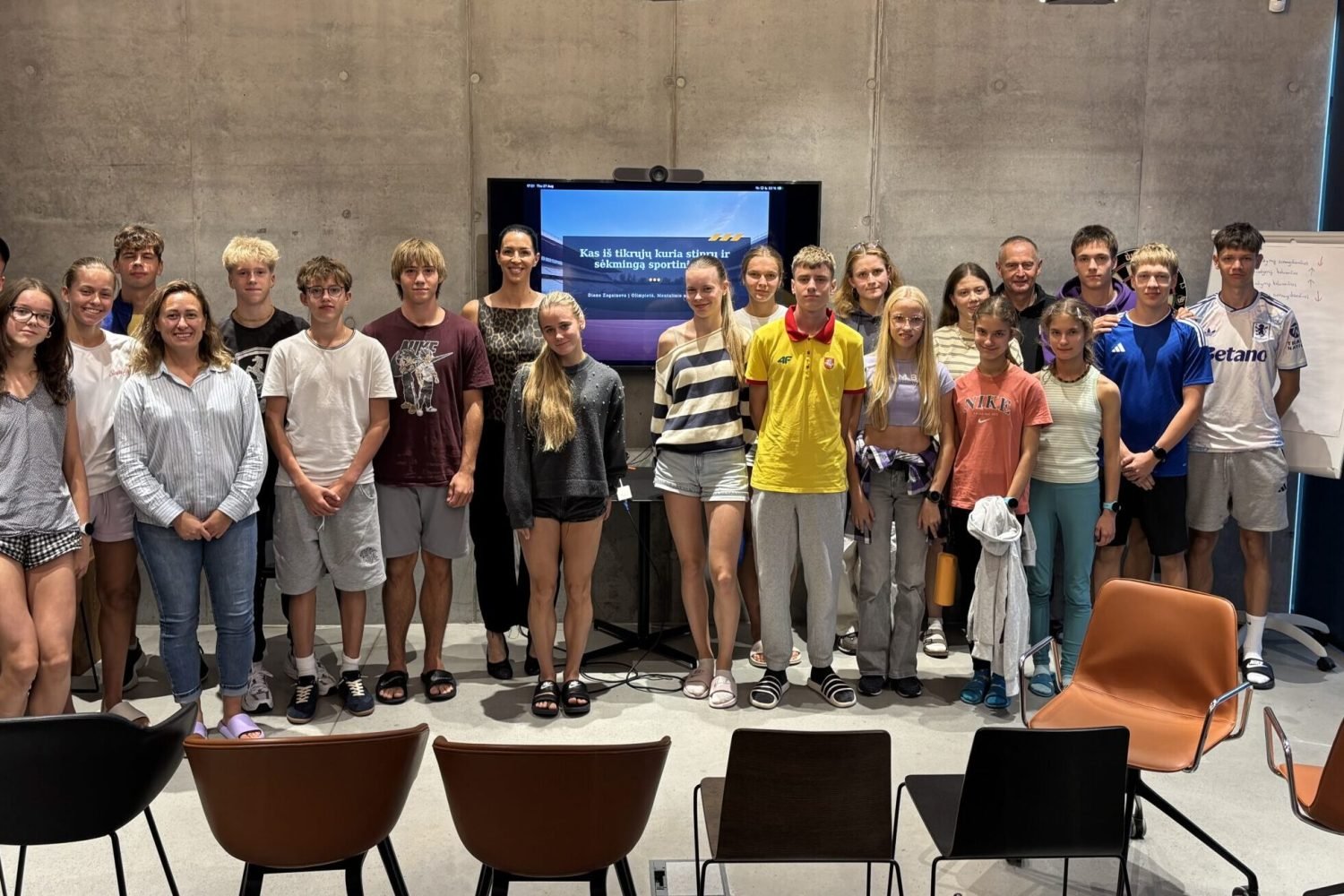

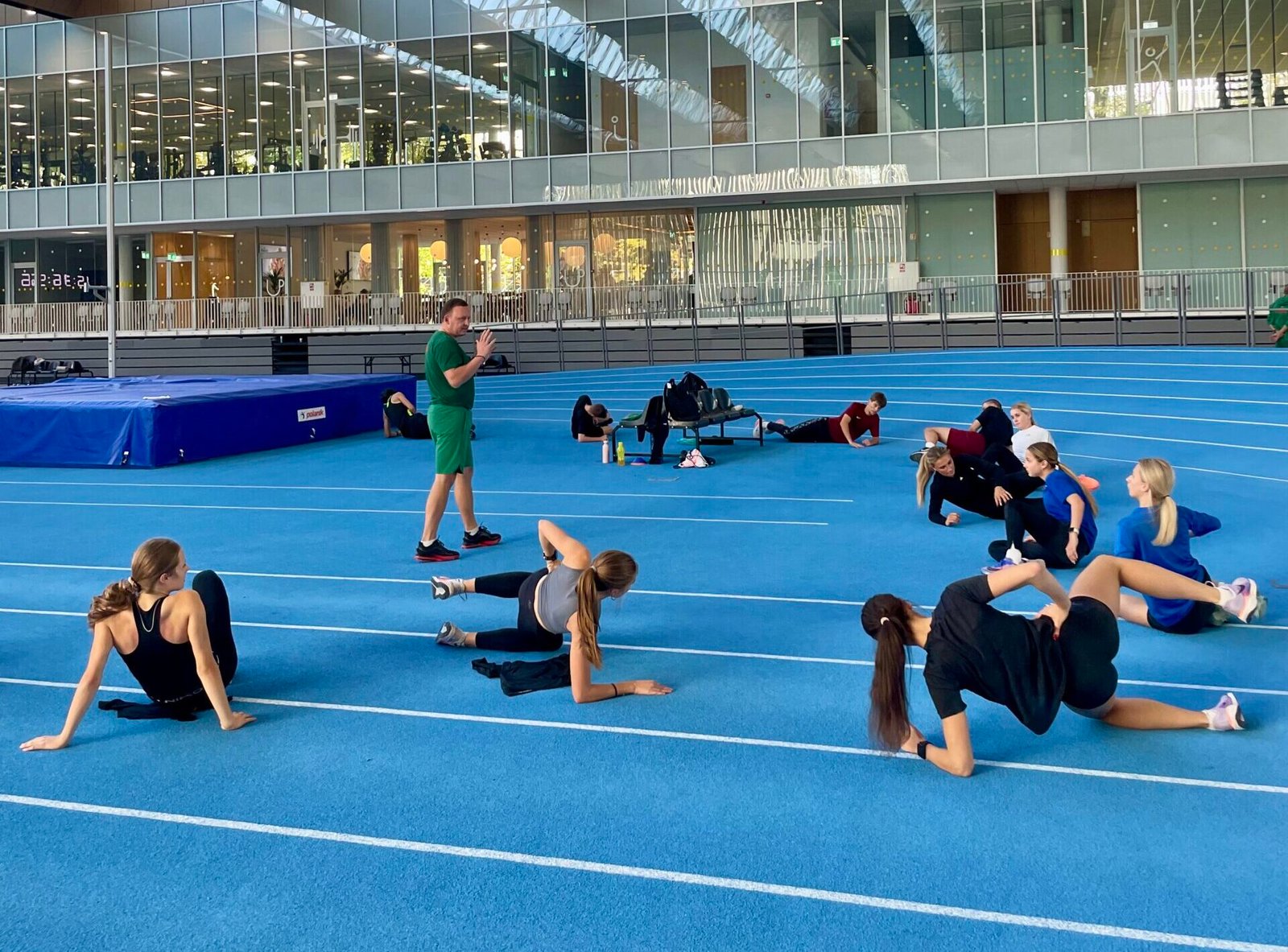
On October 3–4, another camp of the “Athletics Talent” program was held in Kaunas. This time, 42 young track and field athletes and 12 of their coaches participated. Representatives of short-distance and hurdle running, jumping, throwing, and all-around events deepened their knowledge about their disciplines, sports psychology, body care, and dual careers over two days. Unlike previous program events, the main focus is now not on testing, but on sporting thinking, self-awareness, and the comprehensive development of young athletes.
It is important to understand not only what, but also why
The camp was mainly attended by athletes born between 2008 and 2011. Their coaches also participated throughout the entire process – according to the program organizers, it is important that knowledge reaches both sides and that the federation, athlete, and coach cooperate to achieve a common goal. The program director and curator, Dr. Evaldas Kandratavičius , explains that this time more attention was given to education and athletes’ ability to better understand their activities.
“We wanted to educate more, develop a sporting mindset, and help athletes better understand themselves and their event. During practical work by event groups with the Lithuanian national team coaches, we aimed for the young athletes to not only hear what needs to be done but also understand the principles of their event, which details are most important, and why,” says E. Kandratavičius.
According to him, this understanding eventually helps athletes train more consciously and makes it easier for coaches to unlock their potential. Therefore, the program aims not to create a separate system alongside the personal work of the coach, but to strengthen their collaboration.
Sports psychology and life outside the stadium
One of the most important topics of the camp was sports psychology. The young athletes learned about the causes of stress and ways to manage it, and in the session for coaches, they discussed how to develop psychological skills in everyday training sessions.
“What particularly stuck with me was the idea that psychological abilities, like physical characteristics, can and should be trained continuously – learning to manage emotions, attention, reactions to failures, tough training days, fatigue, or lack of motivation,” emphasizes E. Kandratavičius.
The camp also focused on a dual career path – the opportunity to combine high-performance sports with studies and the choice of a future profession. In the session with the certified lecturer, young athletes were encouraged to better understand their strengths, interests, and values so that they could make future decisions more consciously.
“Sport is a very important part of the lives of these young people, but we care not only about their athletic results – we also care about their personalities, choices, and life beyond the stadium,” says the program director. In his opinion, sport and education should not compete – once you learn to plan, these fields can be successfully combined.
Knowledge from experts and inspiration from a champion
In the practical part of the camp, physiotherapist Mantas Lesnickas presented a body care method applied after physical exertion. According to E. Kandratavičius, it is important that young athletes become familiar with modern methods while developing as athletes and gradually learn to apply them in daily workouts.
The captain of the Lithuanian athletics team, Andrius Gudžius, also visited the camp. At the “Star Athlete” type meeting, young athletes had the opportunity to hear the story of a high-level athlete and learn more about the path to great victories.
“For a young athlete, it is important to see that the path to a high result is not straightforward – it includes difficult moments, doubts, failures, and decisions that must be made. Sometimes such a living story tells a young person more than a theoretical lecture,” E. Kandratavičius is convinced.
Talent needs the right environment to flourish.
The program director emphasizes that the development of young athletes cannot be limited solely to physical attributes or sporting results. Equally important is helping them understand their bodies, the training process, and themselves.
“A talented athlete can only remain talented if we don’t create the right environment for them to grow. To me, it somewhat resembles a plant – no matter how promising it is, without the right conditions its potential may not fully develop. It’s very similar with young athletes,” shares E. Kandratavičius.
The feedback collected from athletes after the camp delights the program organizers – young athletes see the meaning and value of such meetings. This confirms that the chosen direction is necessary, and that education and collaboration become an important part of talent development.
“Our young athletes are curious and, in a good way, demanding – they quickly sense whether what we offer them makes sense. Therefore, their positive feedback is very encouraging. For us, this is probably the most important signal that we are moving in the right direction,” says the program director, adding that he is already looking forward to new meetings with young athletes and their coaches.
The camp is funded from the state budget funds allocated by the National Sports Agency under the talent development project “Athletics Talent.” This is the Lithuanian Athletics Federation’s program for identifying and developing young talents, aimed at discovering and developing promising athletes. The program is based on the Long-Term Athlete Development Strategy (IALS), focused on sustainable athlete development, proper preparation for high performance, and prevention of the negative effects of early specialization.